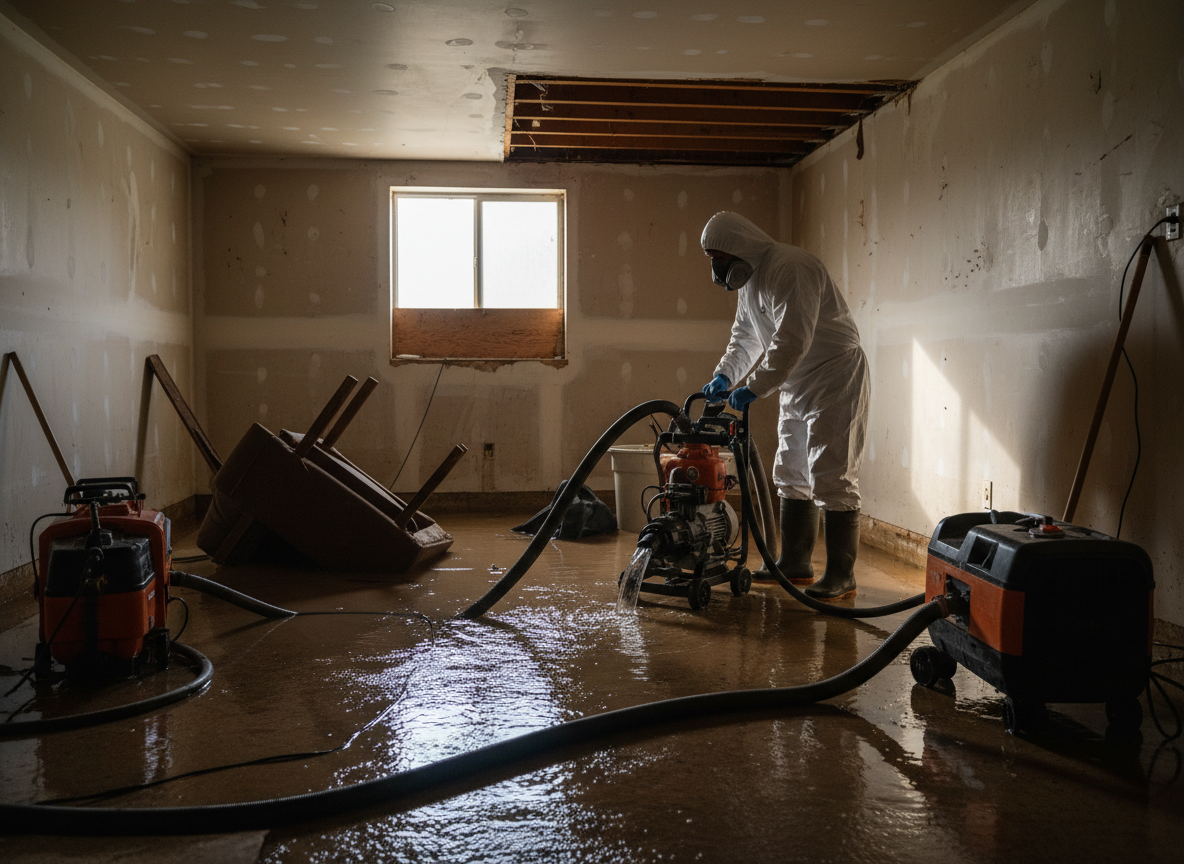
Emergency water cleanup in Midway City begins with isolating the source, whether from a ruptured supply line in a 1960s tract home or storm-driven intrusion through flat roofs common along Beach Boulevard. Crews extract standing water before it migrates into the slab or wall cavities typical of stucco construction in Orange County. Delaying removal allows moisture to reach electrical boxes and subflooring, especially when winter rains push groundwater levels higher in the flat terrain near Westminster.
Once water is removed, dehumidification targets hidden pockets behind cabinets and under vinyl flooring found in many Midway City residences built before updated plumbing codes. Technicians monitor moisture readings in drywall and base plates to prevent secondary mold growth that thrives in the area's mild, humid winters. Homes near the 405 corridor often require extra attention to HVAC returns that can spread spores if not addressed within the first twenty-four hours.
Local soil conditions around 15142 Beach Blvd consist of sandy loam that drains quickly yet leaves residual dampness beneath raised foundations, demanding thorough subfloor drying. Technicians also check for compromised stucco weep holes that allow water to re-enter during follow-up showers. Every job includes documentation for insurance adjusters who routinely review claims from this zip code due to aging cast-iron drains still present in many blocks.
Technician insight
In California the thing that catches most people out with emergency water cleanup is how fast moisture travels under the slab in Midway City homes built on the old sandy loam. A small kitchen leak on Beach Blvd can reach the opposite wall within hours because the soil doesn't hold water long enough to give obvious signs upstairs. Homeowners often stop at visible puddles and miss the base plates that stay wet for weeks.
Overflow from upstairs bath in Midway City duplex
Water migrated through the ceiling into the lower unit living room. Inspection showed saturated drywall and carpet pad plus hidden moisture in the shared wall cavity. Crews extracted water, placed drying equipment, and returned for three days of monitoring until readings stabilized. The lower unit was cleared for repairs without mold growth.
How it works
- 1
Source Isolation
Locate and stop the water source using shutoff valves or temporary containment before extraction begins.
- 2
Standing Water Removal
Deploy pumps and wet vacuums to extract water from floors, carpets, and low-lying areas within the first hours.
- 3
Moisture Mapping
Use meters to identify affected materials behind walls and under flooring throughout the Midway City property.
- 4
Drying and Monitoring
Place air movers and dehumidifiers, then return daily to track progress until readings return to normal levels.
Pricing
Upfront quotes provided after inspection; final cost depends on affected square footage and materials.