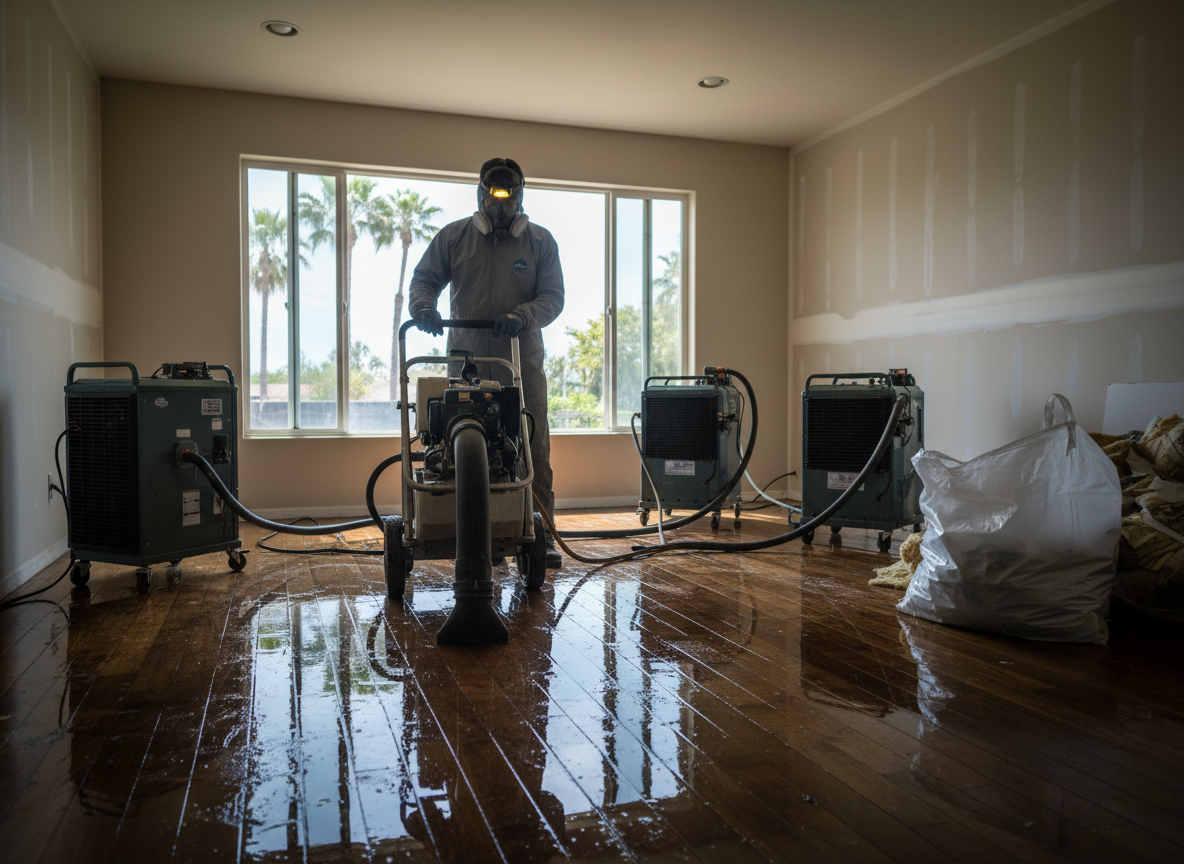
Water damage mitigation starts with rapid extraction to stop water from migrating into cavities common in Midway City housing stock built from the 1950s onward. Older lath-and-plaster walls and raised foundations allow water to travel far from the original leak point, so we use moisture meters and thermal imaging to map every affected layer before demolition begins. In the California area, even modest leaks can saturate insulation and subfloors within hours, raising the risk of secondary damage if not addressed immediately.
Edge cases we see regularly include water trapped behind built-in cabinetry or under vinyl flooring installed over concrete slabs in nearby neighborhoods. These require targeted removal of baseboards and sometimes temporary relocation of appliances to reach all wet material. We also watch for electrical hazards where outlets sit low on walls, a frequent layout in local single-story homes, and isolate power before any extraction equipment is placed.
Code considerations in the California area mean we document every step for insurance adjusters and note when permits may be needed for structural repairs that follow mitigation. Homeowners often underestimate how quickly drywall paper facing delaminates once wet, so we cut at least 12 to 18 inches above the visible water line to ensure clean, dry edges for later reconstruction.
Technician insight
In California, the thing that catches most people out with water damage mitigation is how quickly moisture wicks upward into the plaster-and-lath walls typical of Midway City homes from the mid-century era, creating hidden pockets behind cabinets that standard fans never reach without first opening the wall.
Pipe Leak Under Midway City Kitchen
A slow supply-line leak had soaked the subfloor and traveled into the adjacent wall cavity. Extraction and targeted drying prevented mold growth and allowed the homeowner to keep the original cabinets after we confirmed all moisture was gone.
How it works
- 1
Initial Assessment
We arrive within hours, locate the water source, and document moisture levels throughout the structure using calibrated meters.
- 2
Water Extraction
Standing water is removed with truck-mounted pumps and portable extractors suited to the home's layout and floor type.
- 3
Drying and Monitoring
Air movers and dehumidifiers are positioned, with daily moisture checks to confirm materials return to normal readings.
- 4
Final Verification
Once dry, we remove equipment and provide a written summary of all affected areas for your records.
Pricing
Upfront quotes after inspection; final cost depends on square footage affected, depth of water intrusion, and materials that must be removed.