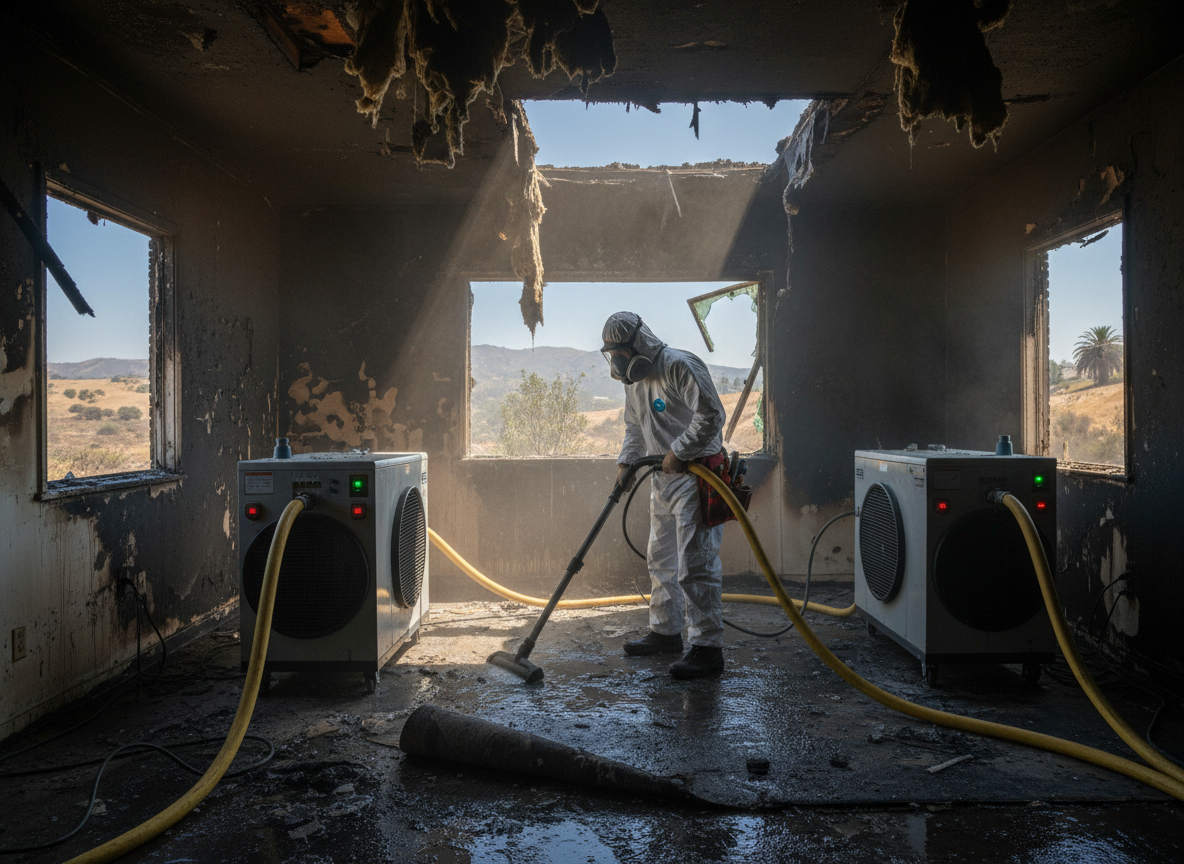
Fire suppression in Midway City homes often forces water deep into stucco walls and older plaster ceilings common in Orange County construction from the 1960s onward. Crews must map moisture behind layers using thermal imaging because standard drying leaves pockets that later support mold when humidity rises after Santa Ana winds subside. Residue from smoke combines with standing water to create acidic conditions that corrode copper pipes and electrical boxes if not neutralized during the initial extraction phase.
Midway City sits on flat terrain near the 405 corridor where runoff from neighboring Westminster lots can re-enter structures days after the fire crew departs. Technicians isolate HVAC systems early to prevent soot circulation through shared ductwork in attached garages and add-on rooms typical of local ranch-style houses. Delaying full cavity drying past the first 48 hours increases the chance that particleboard subfloors swell and telegraph through new flooring installed later.
California building codes require removal of all water-affected insulation in fire-damaged walls once moisture exceeds 18 percent, a threshold reached quickly when 2-by-4 framing absorbs runoff from roof lines. Restoration teams document hidden saturation in crawl spaces beneath Midway City homes where soil stays damp year-round, then install temporary negative air to keep airborne contaminants from drifting into undamaged bedrooms during demolition.
Technician insight
In California, the thing that catches most people out with water damage remediation after fire is how quickly water from suppression hoses migrates into the crawl spaces of 1960s Midway City homes when the soil stays damp from coastal influence, turning a two-day job into hidden mold weeks later.
Kitchen Fire Runoff in Midway City
Firefighters hosed down a kitchen blaze in a single-story home near Beach Boulevard. Water traveled under cabinets and into the adjacent bedroom subfloor. Extraction and targeted drying prevented swelling in the particleboard and kept mold from forming before the owners returned.
How it works
- 1
Initial Assessment
Technicians arrive within hours, document visible water lines from suppression hoses, and use meters to locate moisture behind walls and under floors in Midway City residences.
- 2
Water Extraction
High-volume pumps and wands remove standing water from carpets, hardwood, and subfloors while containing soot-laden runoff to prevent cross-contamination.
- 3
Drying and Dehumidification
Industrial air movers and dehumidifiers run continuously, targeting cavities in stucco and plaster that trap moisture after fire department activity.
- 4
Smoke Residue Cleaning
Affected surfaces receive pH-neutral cleaners to neutralize acidic soot before mold sets in during the post-fire dry period.
- 5
Final Verification
Moisture readings are rechecked and documented to confirm levels match pre-loss conditions before any reconstruction begins.
Pricing
Costs depend on square footage affected, depth of water penetration into walls, and whether HVAC cleaning is required; upfront quotes provided after inspection.