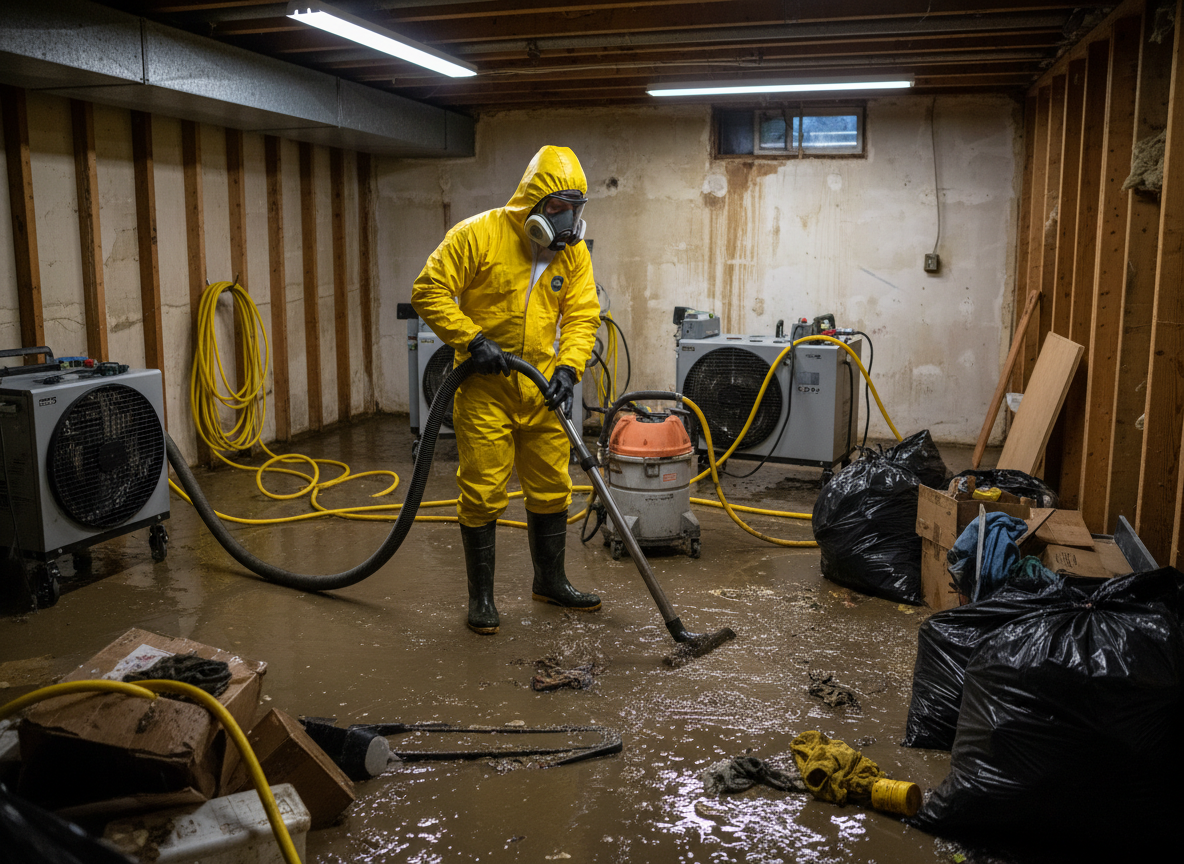
Sewage backups in Midway City homes often trace to aging cast-iron or clay pipes common in the area's mid-century housing stock along Beach Boulevard and surrounding streets. When these lines fail, raw waste mixes with household water and spreads quickly through slab foundations or crawl spaces typical of California construction. Technicians must isolate the affected zones, extract standing effluent, and apply hospital-grade disinfectants while monitoring for hidden moisture behind baseboards and under flooring that can lead to mold if missed.
California building codes require proper disposal of biohazardous material at licensed facilities, and crews in Midway City follow strict protocols to avoid cross-contamination during transport. Edge cases include sewage that reaches HVAC ducts or electrical panels, demanding coordinated shutdowns before cleaning begins. Homeowners frequently discover the issue only after odors appear days later, at which point subflooring and drywall may already need removal to reach saturated insulation.
Heavy seasonal rains in the region can overwhelm municipal lines near Midway City, pushing wastewater back into residential yards and garages. Restoration teams document every step with photos for insurance adjusters and coordinate with local health departments when contamination crosses property lines. Skipping the final clearance testing leaves lingering bacteria that reactivates with normal humidity levels common along the coast.
Technician insight
In California, the thing that catches most people out with sewage cleanup is how quickly the effluent travels under the slab in older Midway City homes built before modern vapor barriers; once it reaches the soil beneath the foundation, you end up chasing moisture weeks later when humidity spikes.
Slab Leak Backup on Beach Blvd
A Midway City residence experienced sewage rising through floor drains after a line clog. Crews found effluent had wicked into the particleboard subfloor and insulation cavities. They removed the compromised sections, disinfected the concrete, and ran drying equipment for five days until moisture levels stabilized.
How it works
- 1
Initial Assessment
Technicians arrive within hours, map the contamination path, and test air quality while wearing full PPE.
- 2
Containment and Extraction
Plastic barriers isolate rooms; pumps and wet vacuums remove standing sewage and solids from floors and walls.
- 3
Cleaning and Disinfection
Surfaces receive antimicrobial treatments followed by HEPA air scrubbing to capture airborne particles.
- 4
Drying and Monitoring
Industrial dehumidifiers and moisture meters track hidden dampness until readings meet industry standards.
- 5
Final Clearance
Independent testing confirms safe conditions before any reconstruction work begins.
Pricing
Costs depend on the volume of affected space, depth of penetration into flooring or walls, and whether HVAC or electrical systems require shutdown.