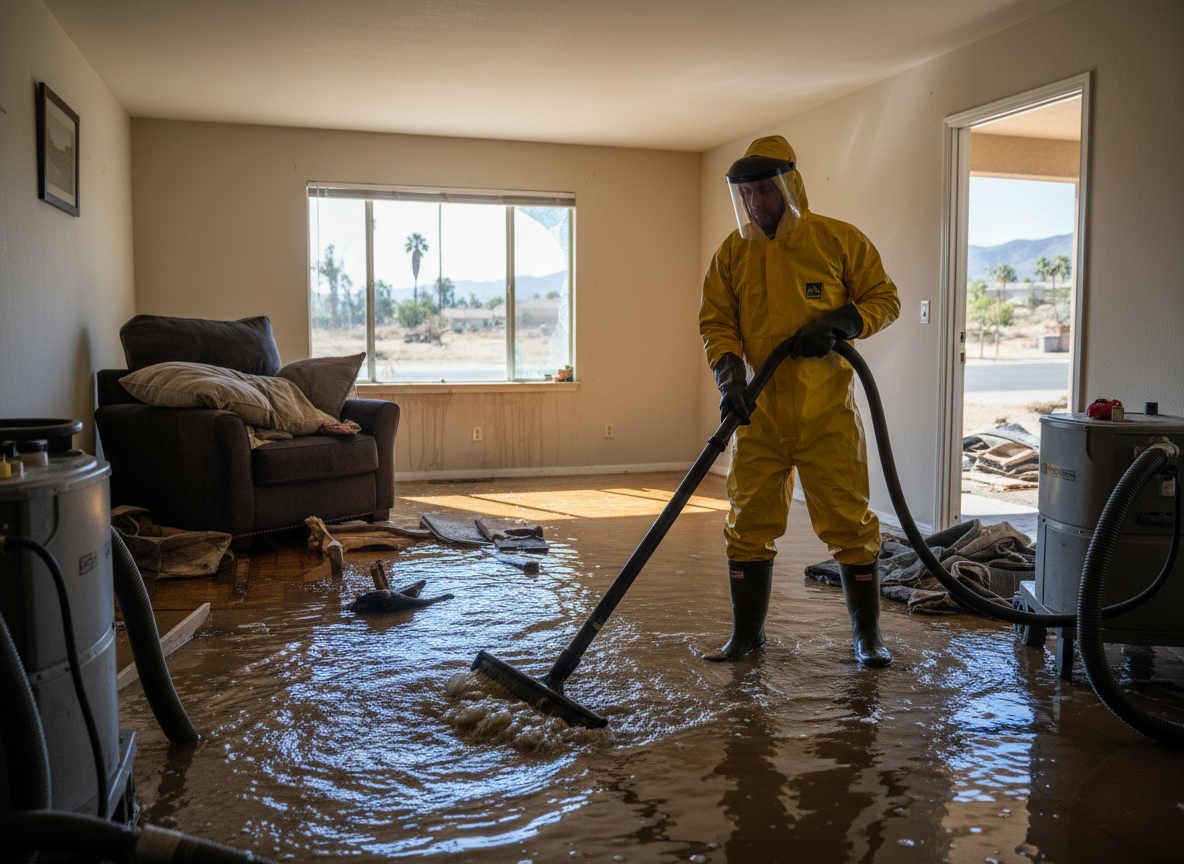
Rapid water extraction in Midway City starts with truck-mounted pumps and portable extractors that pull standing water from carpets, hardwood, and concrete slabs common in Orange County tract homes built from the 1960s onward. Crews focus first on removing bulk water within the first hour because clay soils around Midway City hold moisture against foundations, allowing water to wick back into walls if left overnight. Infrared meters locate hidden pockets behind baseboards and under vinyl that standard fans miss.
Edge cases appear often after winter storms when coastal humidity stays above 70 percent for days. In these conditions, extraction must be paired with immediate air movers and dehumidifiers to keep drywall from delaminating. Older Midway City properties with raised foundations require extra time to reach joist bays where water travels along plumbing runs toward the street side of the lot.
California building practices mean many Midway City homes have post-tension slabs; crews avoid drilling or cutting until extraction is complete to prevent stressing cables. Homeowners are advised to shut off electricity at the panel before crews arrive, since standing water near outlets is common after appliance leaks or water heater failures.
Once visible water is gone, moisture readings are taken at multiple depths in flooring and framing. This step prevents callbacks when summer heat later draws residual moisture to the surface and causes cupping or efflorescence on tile.
Technician insight
In California, the thing that catches most people out with Rapid water extraction is the clay soil around Midway City homes that traps water against slab edges after even moderate rain. Homeowners often stop once the floor looks dry, but moisture stays under baseboards and travels toward interior walls because the lots slope only slightly toward the street.
Kitchen appliance leak in Midway City residence
Water from a failed dishwasher spread across tile and into the adjacent laundry room. Extraction crews removed standing water the same evening, then placed drying equipment under cabinets where readings showed elevated moisture in the particleboard. Follow-up visits confirmed levels returned to normal within three days with no need for cabinet replacement.
How it works
- 1
On-site assessment
Technicians arrive within the hour, map water migration using meters, and identify the source before any equipment is placed.
- 2
Bulk water removal
Truck-mounted and portable extractors pull standing water from floors and subfloors while protecting unaffected rooms with containment barriers.
- 3
Targeted drying setup
Air movers and dehumidifiers are positioned based on readings; placement accounts for Midway City wind patterns that can push moist air through open doors.
- 4
Daily monitoring
Return visits track moisture levels until readings match unaffected areas, with adjustments made if hidden moisture surfaces.
Pricing
Cost depends on water volume, number of affected rooms, and whether hidden moisture requires extra drying days; upfront quotes provided after assessment.