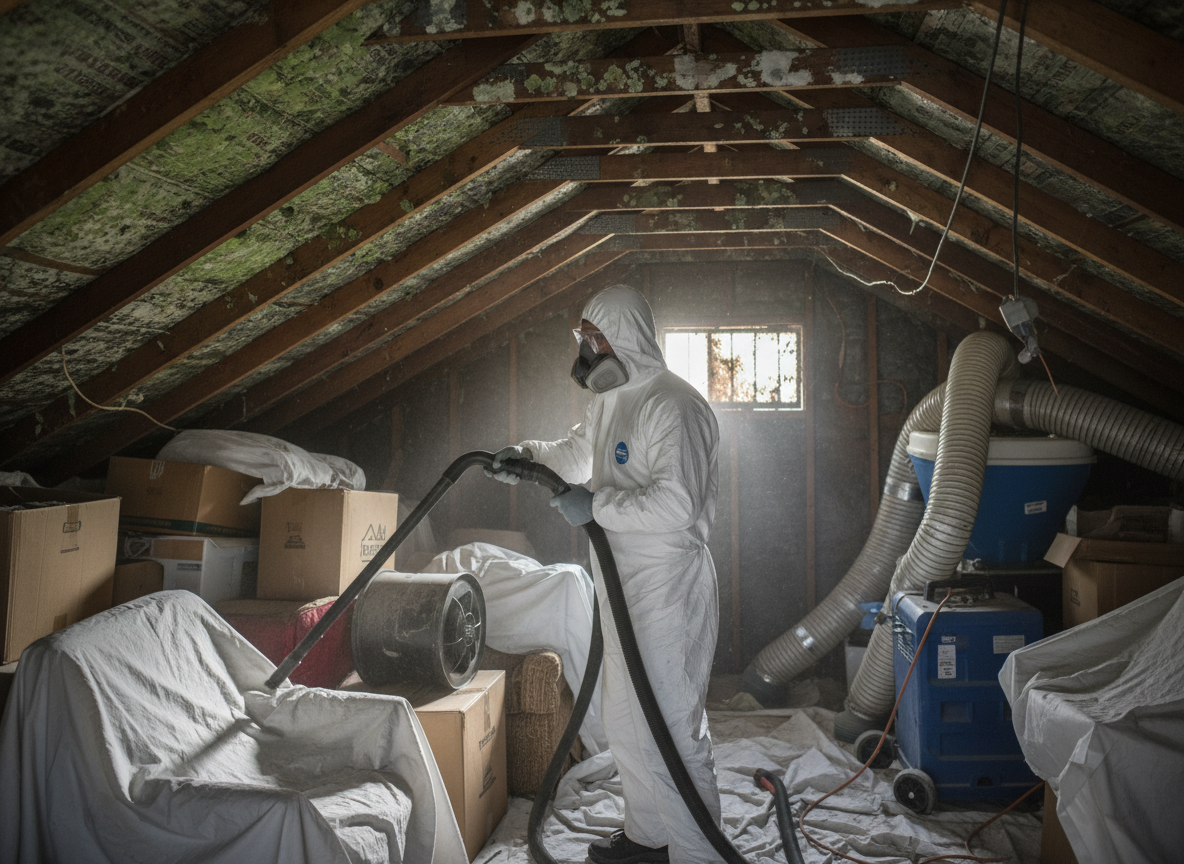
Midway City sits in Orange County where winter rains and coastal humidity drive moisture into attics of homes built from the 1950s through the 1970s. These structures often have limited ridge venting and older insulation that traps condensation against rafters and sheathing. When leaks from roof valleys or bathroom exhaust fans go unnoticed, black mold colonies form along the north-facing slopes that stay cooler longer. Remediation requires full containment to keep spores from drifting into living spaces below, followed by HEPA vacuuming and antimicrobial treatment on wood surfaces that cannot be removed.
Edge cases appear when mold reaches the underside of roof decking near plumbing vents or when cellulose insulation has absorbed repeated moisture from evaporative cooler lines. In these situations crews must pull back insulation in sections, document moisture readings on each joist, and confirm that the HVAC system is isolated before any disturbance begins. California building codes require proper disposal of contaminated materials and negative air pressure throughout the work zone to protect adjacent rooms. Homeowners in Westminster and Garden Grove neighborhoods frequently discover the issue only after ceiling stains appear on the top floor.
Access challenges include low-pitch roofs common on Midway City ranch homes and narrow scuttle holes that limit equipment movement. Technicians use moisture meters and infrared cameras to map wet zones without tearing out drywall first. After removal, the focus shifts to drying rafters to below 15 percent moisture content before any new insulation is installed. This step prevents rapid regrowth during the next rain event.
Technician insight
In California, the thing that catches most people out with attic mold remediation is how coastal fog and winter rains in Midway City keep older attics damp for weeks because the 1960s ranch homes lack ridge vents and the insulation sits right against the sheathing.
Hidden Mold After Roof Leak
A homeowner in Midway City noticed ceiling stains after heavy winter rain. Inspection revealed mold along rafters where a valley leak had soaked cellulose insulation. Crews contained the attic, removed the wet material, treated the wood, and dried the space before reinstalling insulation.
How it works
- 1
Inspection and Moisture Mapping
Technicians enter the attic from Midway City homes to locate active leaks and hidden mold using infrared imaging and pin meters on rafters and sheathing.
- 2
Containment Setup
Plastic barriers and negative air machines isolate the attic from living areas to prevent spore migration into hallways and bedrooms below.
- 3
Removal and Cleaning
Affected insulation is bagged and removed, wood surfaces are HEPA vacuumed, and antimicrobial solutions are applied to rafters and decking.
- 4
Drying and Verification
Air movers and dehumidifiers bring wood moisture below 15 percent, followed by post-remediation testing before insulation replacement.
Pricing
Cost depends on attic size, mold extent, and insulation type; contact for an upfront assessment.